Before & After: How a Unified Roof & Solar Upgrade Saved One Miami Homeowner From an Insurance Drop and a $350 FPL Bill
- Gabriel Alvarez
- Jun 11, 2025
- 4 min read

Summary
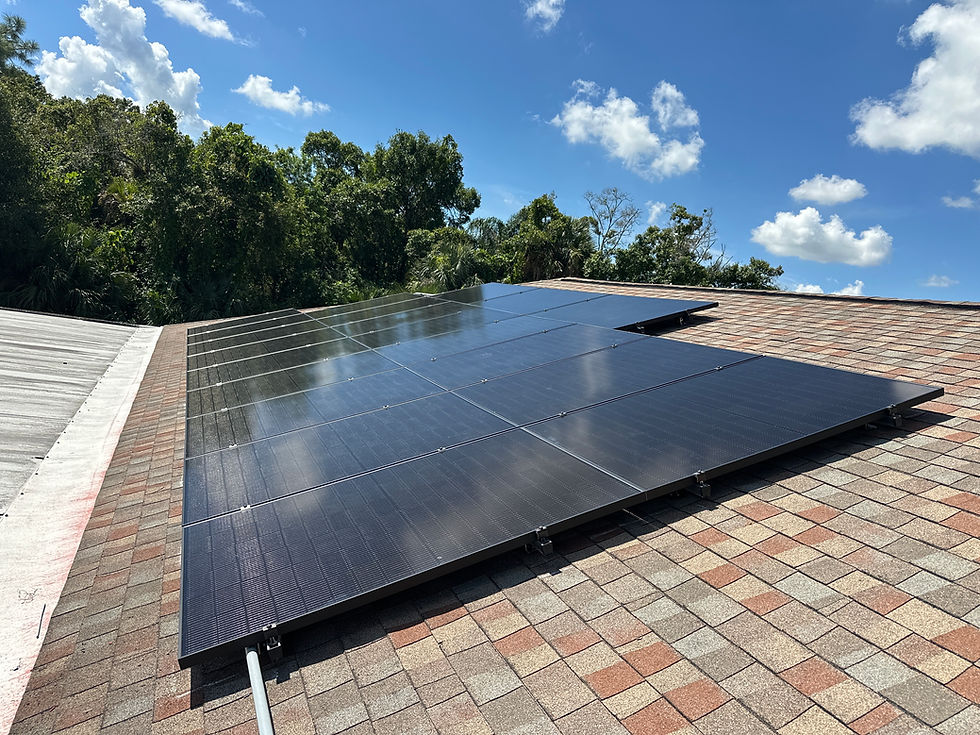
When Miami homeowners think about a "Before & After" project, they usually focus entirely on cosmetic curb appeal. But in South Florida's volatile property insurance market, a true structural transformation runs much deeper. This case study details how we took a classic Miami-Dade home with an aging 16-year-old architectural shingle roof and a soaring $350+ monthly Florida Power & Light (FPL) bill, and executed a unified, high-performance roof-and-solar reset. The result? A 100% code-compliant, wind-mitigated asset that dropped their monthly electric bill down to FPL's $25 mandatory minimum while permanently securing their home’s property insurability.
The "Before" Scenario: An Aging Asset and An Impending Insurance Drop
Our homeowner in South Florida was facing a dual financial headache that is becoming all too common across Miami-Dade County.
First, their traditional architectural shingle roof had just crossed its 16th year of service. While there were no active, visible ceiling leaks inside the home, their private insurance carrier issued a strict ultimatum ahead of policy renewal: Provide a certified roof inspection proving exactly 5 years of remaining useful life under Florida's 15-year roof age laws, or face immediate non-renewal. Because private carriers across Florida are aggressively limiting their windstorm risk exposure, shingle roofs older than 15 years are facing unprecedented scrutiny.
Second, the home’s outdated energy profile was bleeding money. Between running a 4-ton central HVAC system to combat Miami’s intense 130°F attic heat index and lack of modern thermal insulation, the homeowner was paying an average of $350 per month to FPL—a variable cost guaranteed to rise year after year.
The homeowner initially looked into two separate aftermarket solutions: hiring a low-bid roofing contractor to slap down cheap shingles, and letting a door-knocking solar salesman bolt panels on top afterward. However, realizing that uncoordinated solar attachments can void new roof warranties and compromise wind-uplift ratings under strict High-Velocity Hurricane Zone (HVHZ) codes, they opted for our Roofing and Solar Protocol.
The Structural Blueprint: Step-by-Step Transformation
To successfully transition this home from an insurance liability into an energy-independent fortress, Greener Roofing & Solar executed a synchronized, seven-stage engineering workflow:
Phase 1: Overcoming the Roof Deck "Skeleton" Weakness
During the initial tear-off phase, we stripped away the old degraded asphalt shingles down to the bare plywood sheathing. In Miami-Dade, older roofs are frequently plagued by loose decking and smooth-shank nails that fail modern wind-uplift testing. We audited the wood deck, replaced hidden areas of soft wood rot caused by trapped attic humidity, and entirely re-nailed the deck deck using structural Ring-Shank nails. These specialized fasteners feature ridges that grip the wood fibers like a screw, dramatically increasing the home's resistance to high-velocity category 5 hurricane winds.
Phase 2: Installing the Secondary Water Barrier
Instead of using cheap synthetic felt paper that easily tears during a storm, we upgraded the home to a premium, high-temperature self-adhering Peel-and-Stick secondary water barrier directly onto the bare wood. This is a game-changer for Florida insurance underwriting. Even if a future hurricane manages to blow away the primary exterior shingles, this secondary self-healing barrier keeps the home 100% waterproof, preventing catastrophic indoor water intrusion and qualifying the homeowner for maximum wind mitigation premium credits.
Phase 3: The Primary Covering and Solar Integration
For the exterior layer, the homeowner chose a high-performance, wind-resistant architectural shingle profile rated to withstand up to 130+ MPH wind streams. Crucially, because our roofing and solar divisions engineered this project under a single roof blueprint, all primary electrical conduits, structural rafter attachment zones, and specialized flashing layers were mapped out before the final shingles were laid down. This eliminated the classic aftermarket mistake of drilling random holes into a finished roof and relying on a temporary bead of caulk to prevent a leak.
The "After" Metrics: Financial Freedom and Carrier Eligibility
The transformation of this property goes far beyond a beautiful exterior. The hard, verified numbers tell the true story of this project's ROI:
Operational Metric | The "Before" Profile | The "After" Profile (Unified Reset) |
Roof Age & Status | 16 Years Old (Threat of Non-Renewal) | Brand New (100% Permitted HVHZ System) |
Wind-Uplift Defense | Outdated Smooth Nails / No Secondary Barrier | Structural Ring-Shank Nails + Full Peel-and-Stick |
Average Monthly FPL Bill | $350.00+ | $25.00 (Mandatory Minimum Connection Base) |
Insurance Underwriting | High Risk / Targeted for Policy Drop | Preferred Risk / Fully Eligible for Rate Discounts |
Warranty Coverage | Expired | Single-Source Combined Workmanship Warranty |
By engineering the solar array with a specialized 100% production offset mandate tailored to the family’s exact consumption habits, the solar panels now cleanly absorb the home’s full thermal load. The home is now powered almost entirely by clean, grid-tied solar energy, dropping their financial obligation to FPL down to the absolute bare minimum connection fee.
Don't Settle for Two Separate Campaigns
The greatest lesson of this Miami case study is the danger of fragmented contracting. When a homeowner treats roofing and solar as two entirely separate projects, they open themselves up to massive finger-pointing. If a leak occurs down the road, the solar company blames the roofing materials, the roofer blames the solar bracket penetrations, and the homeowner is stuck holding the bill while their insurance carrier denies the claim.
By choosing a unified approach, this Miami home successfully achieved perfect structural harmony: a roof that stands completely independent as an ironclad waterproof shield, paired with an aerodynamic solar array engineered to withstand our coastal climate.


Comments