Solar-Integrated Roofs: A New Wave in Energy Efficiency

Summary:
If you are wondering whether solar-integrated roofs are truly the next wave of residential energy efficiency in Miami-Dade County, the answer is a definitive yes—but only if the entire system is engineered from day one as a single, cohesive unit. In South Florida’s High-Velocity Hurricane Zone (HVHZ), true solar integration means that every attachment point, panel placement, and flashing detail must be structurally calculated to withstand up to 165+ MPH winds while maintaining a flawless waterproof seal. When done correctly through an integrated workflow, a solar roof doesn't just lower your electric bill; it protects your home equity, secures your long-term property insurability, and maximizes thermal efficiency without creating hundreds of future leak points.
The Critical Distinction: Solar Accessories vs. Engineered Systems
In the South Florida market, a dangerous misconception persists that solar panels are merely an aftermarket accessory—something to be bolted onto a house like a satellite dish. However, once your property enters Miami-Dade HVHZ territory, that mindset becomes an active liability. Every single attachment point drilled into your decking becomes a permanent part of your home’s wind-resistance and waterproofing strategy.
When a solar array is installed incorrectly, the panels behave like giant aerodynamic wings. During a major tropical storm or hurricane, high-velocity winds rush underneath the solar array, building immense upward pressure. If the edge setbacks, rail spans, and attachment spacings haven't been meticulously engineered, a single point of failure can cause a catastrophic, cascading peeling effect that rips sections of the underlying roof structure away with it.
True solar integration means designing the entire assembly from the roof deck up. The method used to achieve this structural baseline changes entirely based on the type of roofing material your home requires:
1. Standing Seam Metal Roofing (The Preferred Choice)
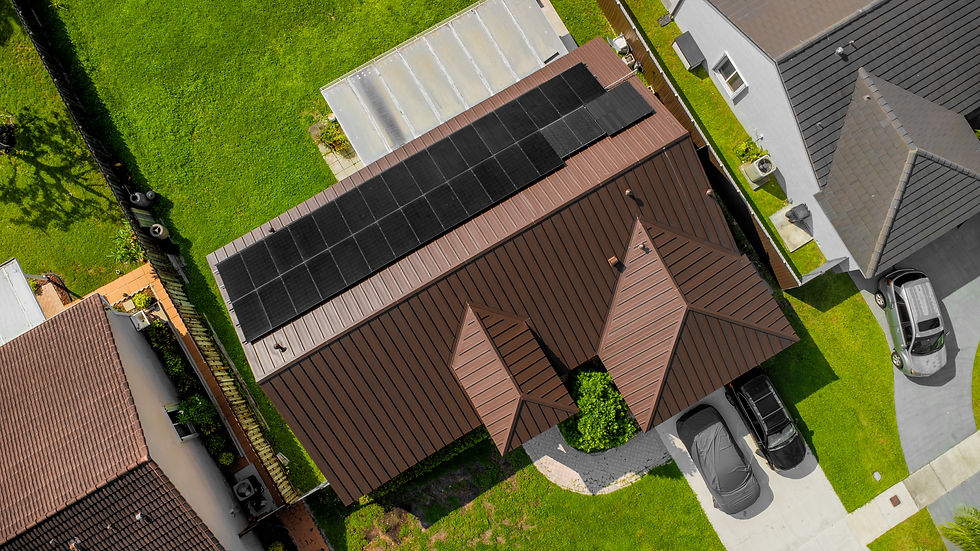
This represents the cleanest, most efficient solar integration option available. Because standing seam metal roofs feature raised, interlocking tracks, an experienced roofing team can utilize non-penetrating mechanical compression seam clamps. These specialized clamps secure the entire solar rail system directly onto the metal ribs without drilling a single hole through your roof panels. This eliminates future waterproofing risks, accommodates natural thermal expansion, and creates a lifetime structural bond.
2. Clay and Concrete Tile Roofing
Tile roofing is iconic across Miami-Dade communities, but it is highly complex to integrate with solar. Crafting a secure attachment point means you never want a crew drilling straight through a finished clay or concrete tile and relying on a bead of caulk to save the day. Instead, integrated teams carefully remove individual tiles at designated attachment zones, secure heavy-duty engineered roof mounts and elevated flashing assemblies directly to the rafters, and then seamlessly re-install or replace the surrounding tiles. This preserves your classic Mediterranean aesthetic while maintaining absolute wind-uplift performance.
3. Architectural Asphalt Shingles
For standard shingle installations, solar mounts must penetrate into the home's framing or approved structural decking zones. To prevent future leaks, the installation must rely on layered, woven flashing profiles that blend seamlessly with the underlayment and natural water-shedding principles of the shingles. Treating chemical sealant or caulking as your primary defense is the biggest mistake a contractor can make; sealants dry out, crack, and fail under the South Florida sun, whereas layered flashing endures.
The South Florida Insurance Reality Check
There is a common piece of solar marketing fluff that claims adding panels will instantly cause insurance companies to slash your annual premiums. In Miami-Dade, the reality is far more nuanced. Florida insurance carriers do not offer automatic discounts simply because a home has solar panels. Insurance underwriters are looking at a single metric: Did this project increase or decrease our hurricane risk exposure?
If an aftermarket solar system is slapped onto a 15-year-old roof with unknown attachment metrics or missing municipal permits, it becomes an insurance nightmare. The carrier may threaten non-renewal, request immediate engineering documentation, or dispute future storm claims by arguing that water intrusion originated at an unapproved solar penetration point.
The true insurance value is unlocked when solar is integrated directly into a comprehensive, fully permitted, newly engineered roofing project. By combining a new roof replacement with a certified solar installation, the homeowner secures:
Perfect documentation packages for underwriter review
Clean municipal inspection records
Upgraded secondary water barriers and advanced roof-deck attachments
Unmatched policy stability and long-term carrier eligibility
The Coordinated Sequence: How True Integration Works
The secret to a successful solar-integrated roof lies entirely within the workflow sequence. Solar hardware should never touch a roof structure until the underlying roofing asset is completely finished, weatherproofed, and independently code-approved.
An elite, unified workflow follows a strict, seven-phase operational sequence:
Phase 1: Engineering & Layout: Before construction, structural loads are calculated, solar production is modeled, and attachment zones are planned to avoid drilling unnecessary holes into finished material later.
Phase 2: Tear-Off & Deck Evaluation: The old roof is completely stripped away so technicians can inspect the wood deck, replace rotted plywood, and confirm structural fastening zones.
Phase 3: Dry-In & Waterproof Envelope: High-temperature, self-adhering secondary water barriers and primary underlayments are installed. At this point, the house is 100% waterproof before solar hardware even arrives.
Phase 4: Roofing System Completion: The exterior roof covering (shingle, tile, or metal) is fully installed, details are finalized, and the roof stands entirely on its own merit as a complete system.
Phase 5: Municipal Inspection Approval: The local building department inspects and formally approves the completed roof assembly, ensuring no roofing defects are hidden underneath solar rails.
Phase 6: Solar Attachment Installation: Using material-specific methods (like non-penetrating clamps for standing seam or flashing hooks for tile), the engineered mounts are securely locked into place.
Phase 7: Electrical Commissioning: The solar panels are mounted, electrical wiring is finalized, final utility inspections are cleared, and the system is safely energized.
The Long-Term Value for Miami Homeowners
Investing in energy efficiency should never come at the expense of structural security. By abandoning the outdated concept of treating solar as an independent add-on and adopting a unified, system-wide integration approach, you insulate your home from the dual threats of rising utility grid rates and severe seasonal weather.
If you only take away one core lesson from this guide, let it be this: a true solar-integrated roof is not a standard roof that happens to have solar panels thrown on top of it. It is an independently code-approved, hyper-waterproof structural envelope that acts as the flawless engineering foundation for a high-yield clean energy system. By choosing an experienced team that coordinates your project from the initial wind-uplift blueprints to the final electrical inspection, you guarantee that your home remains safe, efficient, and fully insurable for decades to come.


Comments